Heat Pumps Explained: Everything Homeowners Need to Know

Introduction

Heat pump grants have made renewable heating more accessible for homeowners across the UK, with government funding helping to reduce the upfront cost of replacing traditional gas or oil heating systems. As a result, more people are considering air source heat pumps as an alternative to traditional heating systems.

However, one of the biggest misconceptions is that obtaining a grant automatically means your home is suitable for a heat pump installation. The reality is that a heat pump is not simply a replacement for a boiler. To operate efficiently, the property and heating system must be assessed carefully, taking into account insulation levels, heat loss, radiator sizing, pipework capacity, hot water requirements, and overall system design.

Many homes can benefit from a heat pump, but not every property is immediately ready without upgrades. In some cases, larger radiators may be required. In others, improvements to insulation or heating pipework may be necessary before a heat pump can deliver the comfort and efficiency homeowners expect.

In this guide, we’ll explain how heat pump grants work, the requirements homeowners should understand before applying, and the common upgrades that may be needed. We’ll also examine one of the most frequently asked questions: Is a heat pump actually cheaper to run than a gas boiler? In addition, we’ll share a recent installation case study from Putney, highlighting the real-world challenges, design considerations, and results achieved when converting a property to a modern heat pump system.

Our aim is simple: to provide facts, not sales pitches, so homeowners can make informed decisions about whether a heat pump is the right choice for their property.

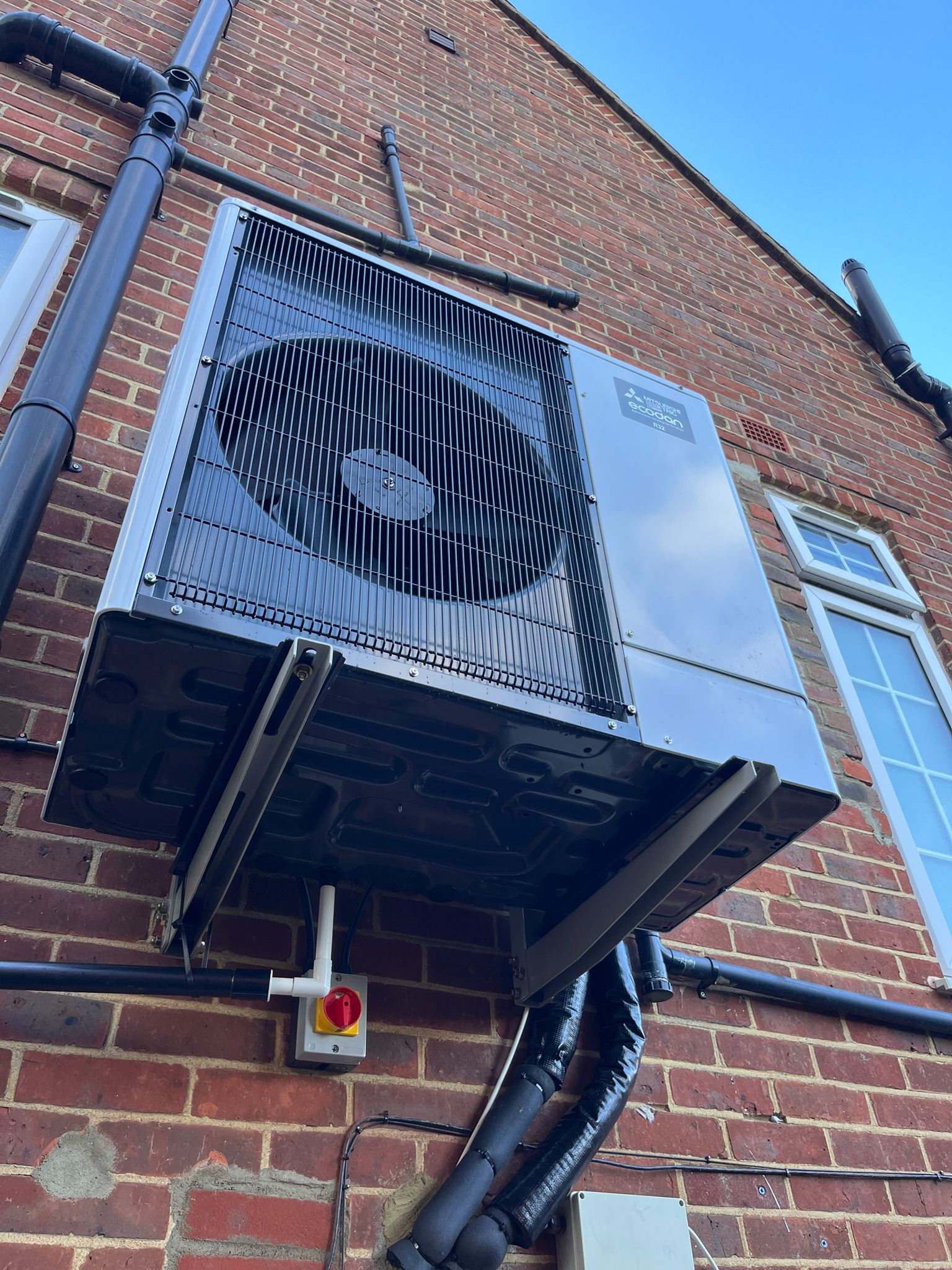
Air source heat pump mounted on exterior brick wall of UK home with insulated pipework and electrical isolation switch.

What You'll Learn in This Guide

Before applying for a heat pump grant, it’s important to understand what’s involved beyond the funding itself.

In this guide, we’ll cover:

  1. How heat pump grants work and who may be eligible
  2. What is the Boiler Upgrade Scheme (BUS)?
  3. Why not every property is immediately suitable for a heat pump
  4. The importance of heat loss calculations and home insulation
  5. Whether existing radiators and pipework are suitable
  6. Why underfloor heating can improve heat pump performance
  7. The hidden costs homeowners often overlook
  8. Whether a heat pump is cheaper to run than a gas boiler
  9. Common misconceptions about heat pump installations
  10. A recent heat pump installation case study from Putney
  11. How Kluk Construction Can Help
  12. A Personal Note from Marcin Kluk

By the end of this guide, you’ll have a clearer understanding of whether a heat pump is the right solution for your home and what preparations may be required before installation.

How heat pump grants work and who may be eligible

Heat pump grants are designed to encourage homeowners to replace fossil fuel heating systems with low-carbon alternatives. In England and Wales, the most well-known scheme is the Boiler Upgrade Scheme (BUS), which provides funding towards the installation of eligible air source and ground source heat pumps.

The grant is typically applied for by the installer on behalf of the homeowner, reducing the upfront cost of the installation. However, receiving a grant is not as simple as owning a property and requesting a heat pump. A number of technical and property-related requirements must be considered before an application can proceed.

In general, homeowners must:

  • Own the property being upgraded
  • Use an MCS-certified installer
  • Meet the scheme’s eligibility requirements
  • Have a suitable property for heat pump installation
  • Ensure the proposed system meets current regulations and standards

What many homeowners don’t realise is that grant eligibility and heat pump suitability are two different things.

A property may qualify for grant funding but still require significant upgrades before a heat pump can operate efficiently. For example, the home may need improved insulation, larger radiators, upgraded pipework, or changes to the hot water system. These factors are often identified during the heat loss assessment and system design stage.

One of the key reasons these upgrades cannot simply be skipped is that modern heat pump installations must be designed to achieve specific efficiency targets. A heat pump uses electricity to produce heat, and the amount of heat generated compared to the electricity consumed is measured by its efficiency, often referred to as the Coefficient of Performance (COP) or Seasonal Coefficient of Performance (SCOP).

If a property loses heat too quickly due to poor insulation, undersized radiators, or an inefficient heating system, the heat pump must work harder and operate at higher temperatures. This increases electricity consumption and reduces efficiency. In some cases, the running costs can become significantly higher than expected, defeating one of the main benefits of installing a heat pump.

This is why heat loss calculations, insulation assessments, radiator sizing, and system upgrades are such important parts of the design process. The goal is not simply to install a heat pump, but to ensure the property can achieve the performance levels required for the system to operate efficiently and economically over the long term.

The most successful heat pump projects begin with a detailed assessment of the property, followed by a system design tailored to the home’s heating demands. Only then can installers accurately determine the size of heat pump required, the upgrades needed, and whether grant funding can be applied as part of the project.

MCS Certificate title with dotted background and date, showing a completed certification graphic with a checkmark watermark on the right.

What is the Boiler Upgrade Scheme (BUS)?

The Boiler Upgrade Scheme (BUS) is the UK Government’s primary incentive for homeowners looking to replace fossil fuel heating systems with low-carbon alternatives.

Scheme timeline:

  • Opened: 23 May 2022
  • Currently scheduled to close: 31 December 2027

The grant is designed to help reduce the upfront cost of installing an eligible heat pump. However, funding alone does not guarantee that a property is suitable for a heat pump installation, which is why professional surveys, heat loss calculations, and system design remain essential parts of the process.


Heating system and Grant Amount:

  1. Air-source heat pump (air-to-water) – £7,500.00
  2. Ground-source heat pump – £7,500.00
  3. Water-source heat pump – £7,500.00
  4. Biomass boiler (limited eligibility) – £5,000.00
  5. Air-to-air heat pump – £2,500.00
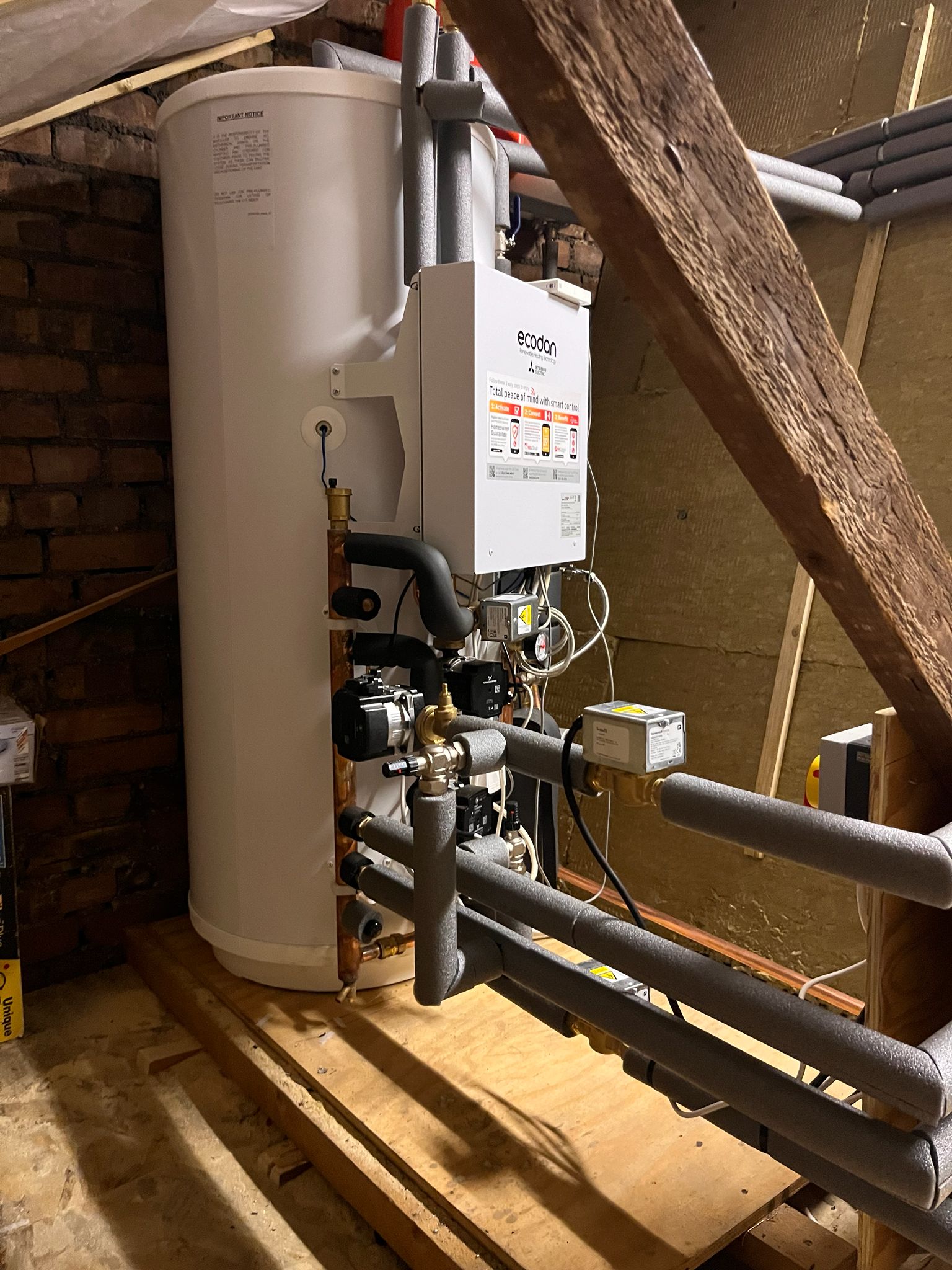
Heat pump hot water cylinder and hydraulic unit installed in loft space with insulated pipework and heating controls.

Why not every property is immediately suitable for a heat pump

One of the biggest myths surrounding heat pump grants is that every property can simply replace its existing boiler with a heat pump and achieve the same results. In reality, heat pumps work very differently from traditional gas or oil boilers, which means the property and heating system must be suitable for low-temperature heating.

Unlike conventional boilers that can produce water temperatures of 70°C or higher, most heat pumps operate far more efficiently at lower flow temperatures, typically between 35°C and 55°C. To maintain comfortable room temperatures, the entire heating system must be capable of delivering enough heat using these lower temperatures.

This is why a professional assessment is essential before any installation takes place.

Several factors determine whether a property is ready for a heat pump:

Insulation Levels

A well-insulated home retains heat for longer, allowing a heat pump to operate efficiently without excessive energy consumption.

Areas commonly assessed include:

  • Loft insulation
  • Cavity wall or solid wall insulation
  • Floor insulation
  • Window and door performance
  • Air leakage and draughts

If a property loses heat too quickly, the heat pump may need to work harder, reducing efficiency and increasing running costs.

Heat Loss Calculations

Every room in the property should undergo a heat loss calculation.

This assessment measures how much heat each room loses during colder weather and determines how much heat output is required to maintain comfortable temperatures.

The results are used to:

  • Size the heat pump correctly
  • Select suitable radiators
  • Design the heating system
  • Predict system efficiency

Without accurate heat loss calculations, a system may be oversized, undersized, or simply unable to perform as expected.

Existing Radiators

Many radiators installed for gas boilers were designed to work with much higher water temperatures.

Because heat pumps operate at lower temperatures, larger radiators are often required to deliver the same amount of heat.

In some properties, only a few radiators need replacing. In others, a complete radiator upgrade may be necessary.

Pipework Capacity

Heat pumps generally require higher water flow rates than traditional boilers.

Older properties may contain microbore pipework or heating circuits that restrict water flow, making it difficult for the system to distribute heat effectively throughout the home.

Where required, sections of pipework may need upgrading as part of the installation process.

Hot Water Requirements

Heat pumps also have different hot water requirements compared to traditional boiler systems.

Many installations require:

  • A compatible hot water cylinder
  • Increased hot water storage
  • Upgraded controls and system components

These requirements should be considered during the design stage rather than after installation.

The Goal Is Efficiency, Not Just Installation

The purpose of these assessments is not to create unnecessary work but to ensure the heat pump can operate efficiently and economically for many years.

A poorly prepared property may still be able to accommodate a heat pump, but the system could consume more electricity, provide less comfort, and fail to deliver the savings homeowners expect.

For this reason, successful heat pump projects focus on the whole property rather than the heating appliance alone. Insulation, heat loss, radiators, pipework, and system design all work together to determine whether a heat pump will perform effectively.

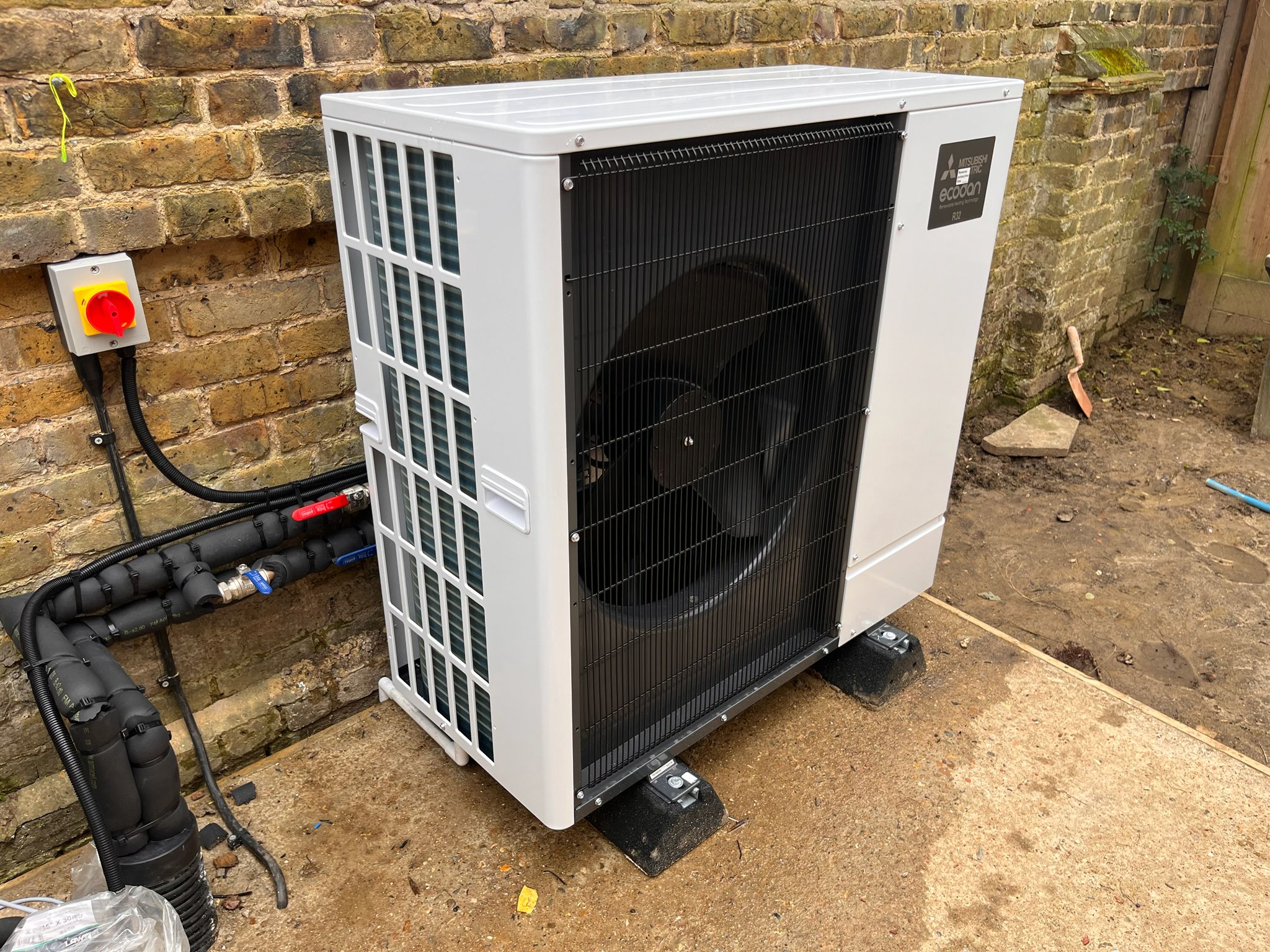
Outdoor Mitsubishi HVAC condenser unit mounted beside a brick wall, with pipes and a red/yellow electrical disconnect switch nearby. It’s an outdoor air conditioning unit.

The Importance of Heat Loss Calculations and Home Insulation

Before any heat pump is specified, a professional heat loss calculation should be carried out. This is one of the most important stages of the entire project, yet many homeowners are unaware of its significance.

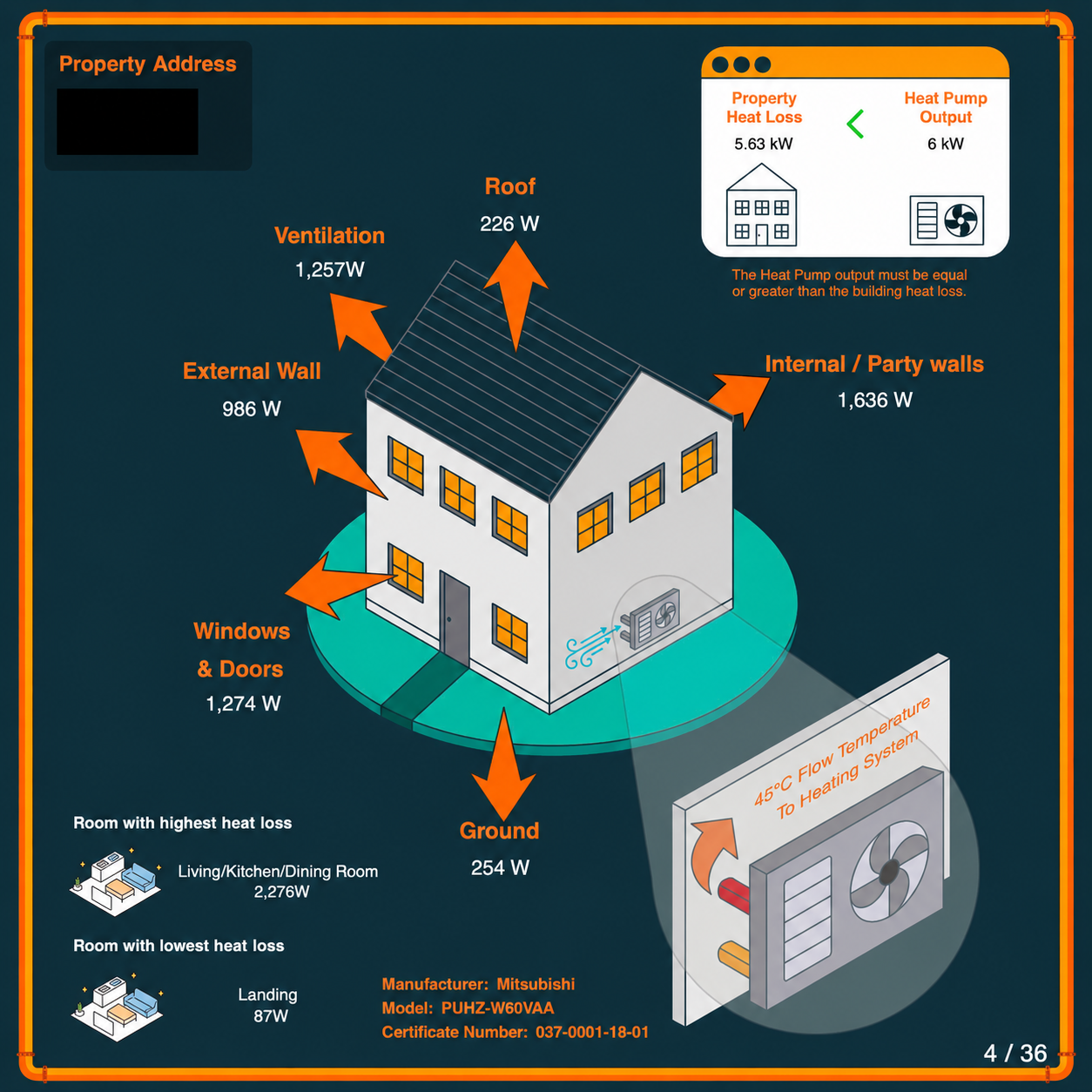
A heat loss calculation measures how much heat escapes from a property during colder weather. Every room is assessed individually, taking into account factors such as room dimensions, wall construction, insulation levels, windows, doors, ceiling heights, and ventilation.

The purpose is simple: to determine how much heat each room requires to remain comfortable during winter conditions.


Why Heat Loss Calculations Matter

Heat pumps cannot be selected based on guesswork.

If a heat pump is too small, it may struggle to maintain comfortable temperatures during colder months. If it is too large, it may operate inefficiently, leading to unnecessary energy consumption and increased running costs.

Accurate heat loss calculations help installers:

  • Determine the correct heat pump size
  • Calculate radiator requirements
  • Assess system efficiency
  • Design suitable heating circuits
  • Predict running costs more accurately

This information forms the foundation of the entire heating system design.


Why Insulation Is Just as Important

Even the most advanced heat pump cannot perform efficiently if heat is constantly escaping from the property.

Think of a home as a bucket. If the bucket has holes in it, continually pouring more water in is not the solution. The holes must be addressed first.

The same principle applies to heating.

When a property is poorly insulated, the heat pump has to work harder and consume more electricity to maintain indoor temperatures. This can reduce efficiency and increase energy bills.

Key areas that are commonly assessed include:

  • Loft insulation
  • Cavity wall insulation
  • Solid wall insulation
  • Floor insulation
  • Double or triple glazing
  • External doors
  • Draught-proofing and air leakage

Understanding Efficiency

One of the main advantages of a heat pump is its ability to produce more heat energy than the electrical energy it consumes.

However, this efficiency depends heavily on the property itself.

A well-insulated home allows the heat pump to run at lower temperatures and lower energy consumption. A poorly insulated property may force the system to operate for longer periods and at higher temperatures, reducing overall performance.

This is one of the reasons installers often recommend insulation improvements before or alongside a heat pump installation.

Can Older Homes Have Heat Pumps?

Yes. Older properties can successfully use heat pumps, but they often require a more detailed assessment.

Many period homes and solid-wall properties can still benefit from heat pump technology, provided that heat loss is properly understood and appropriate upgrades are made where necessary.

The key factor is not the age of the property but whether the heating system has been designed around the home’s actual heat demand.

Heat Loss Calculations Are Not an Optional Extra

For many homeowners, a heat loss survey may seem like an additional step before installation. In reality, it is one of the most valuable parts of the process.

The survey provides the data needed to design a system that delivers comfort, efficiency, and long-term performance. Without it, there is no reliable way to determine whether the property is ready for a heat pump or what upgrades may be required.

A successful heat pump installation starts with understanding how heat behaves within the property. Only then can the right decisions be made regarding insulation, radiator sizing, system design, and overall suitability.

Heat-loss infographic featuring an isometric house, heat pump system, and arrows showing where heat is lost throughout a home.

Call us now

For a free quotation

Whether existing radiators and pipework are suitable

Pipework is one of the most overlooked aspects of a heat pump installation.

While most homeowners focus on the heat pump itself, the pipework hidden beneath floors and within walls plays a crucial role in determining how efficiently the system will operate. Heat pumps generally require higher flow rates than conventional gas boilers, meaning the pipework must be capable of distributing sufficient heat throughout the property.

This is becoming increasingly recognised by architects and designers during renovation projects. We have recently worked on projects where architects have specifically designed heating systems with future heat pump installations in mind.

In some cases, this has involved installing larger heating pipework suitable for a future heat pump while retaining the existing boiler system. The homeowner can continue using their gas boiler today, knowing that much of the infrastructure required for a future heat pump upgrade has already been built into the property.

On some projects, architects have even specified separate pipework strategies during major refurbishments, allowing homeowners to continue using their existing boiler while preparing the property for a future heat pump installation. This type of forward planning can significantly reduce disruption, costs, and uncertainty when the heating system is eventually upgraded.

This type of future-proofing can significantly reduce disruption and costs when the time comes to transition from a boiler to a heat pump.

It is particularly relevant in London, where many properties are more than 100 years old and have passed through multiple owners over the decades. During that time, heating systems are often altered, extended, repaired, and modified numerous times. Extensions may have been added, radiators relocated, pipework rerouted, and different contractors may have worked on the system with varying standards and objectives.

As a result, it is not uncommon to find heating systems that are very different from their original design. Hidden pipework, undocumented alterations, and mixed pipe sizes can all affect how well a heat pump performs. For this reason, it is often better to assume that the existing pipework will require careful assessment rather than assume it is already suitable for a heat pump installation.

Many older properties still contain microbore pipework, commonly 8mm or 10mm in diameter. While these systems may perform adequately with a traditional boiler operating at higher temperatures, they can sometimes restrict the flow rates needed for an efficient heat pump installation.

As part of the design process, installers may assess:

  • Pipe diameters
  • Circuit lengths
  • System balancing
  • Existing pumps and controls
  • Overall flow rates

Where necessary, sections of pipework may need upgrading to ensure the system can deliver the required heat output efficiently throughout the property.

Taking a cautious approach during the design stage is far preferable to discovering potential issues during winter, when rooms struggle to reach temperature or energy bills are higher than expected. A heat pump should provide both comfort and efficiency, and that starts with ensuring the pipework infrastructure is capable of supporting the system properly.

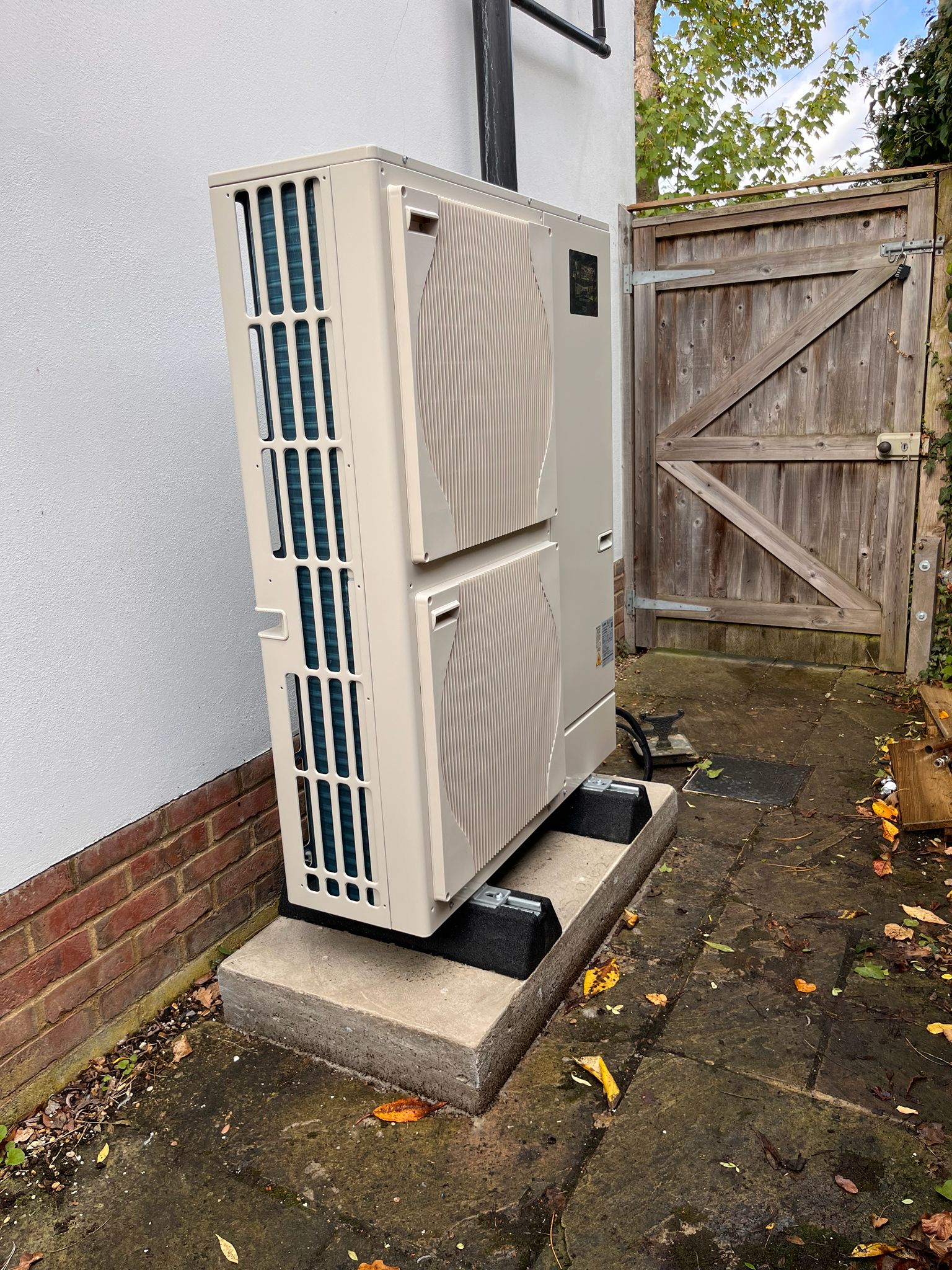
Outdoor air conditioning condenser unit on a concrete pad beside a white wall and wooden gate

Why underfloor heating can improve heat pump performance

While heat pumps can work very effectively with radiators, underfloor heating is often considered the ideal heating system companion for a heat pump.

The reason comes down to temperature.

Heat pumps achieve their highest efficiency when operating at lower flow temperatures. Underfloor heating systems are specifically designed to deliver comfortable room temperatures using water that is significantly cooler than that required by traditional radiator systems.

Instead of concentrating heat into a relatively small radiator surface, underfloor heating spreads heat evenly across the entire floor area. This larger heating surface allows the system to maintain comfort while operating at lower temperatures and consuming less energy.


How Underfloor Heating Works with Heat Pumps

A typical underfloor heating system may operate with water temperatures between 30°C and 45°C, which aligns closely with the optimal operating range of many air source heat pumps.

This allows the heat pump to:

  • Operate more efficiently
  • Use less electricity
  • Maintain more consistent temperatures
  • Reduce system cycling
  • Improve overall comfort levels

The result is a heating system that can deliver gentle, even warmth throughout the property.

However, it is important to understand that not all underfloor heating systems are designed in the same way.

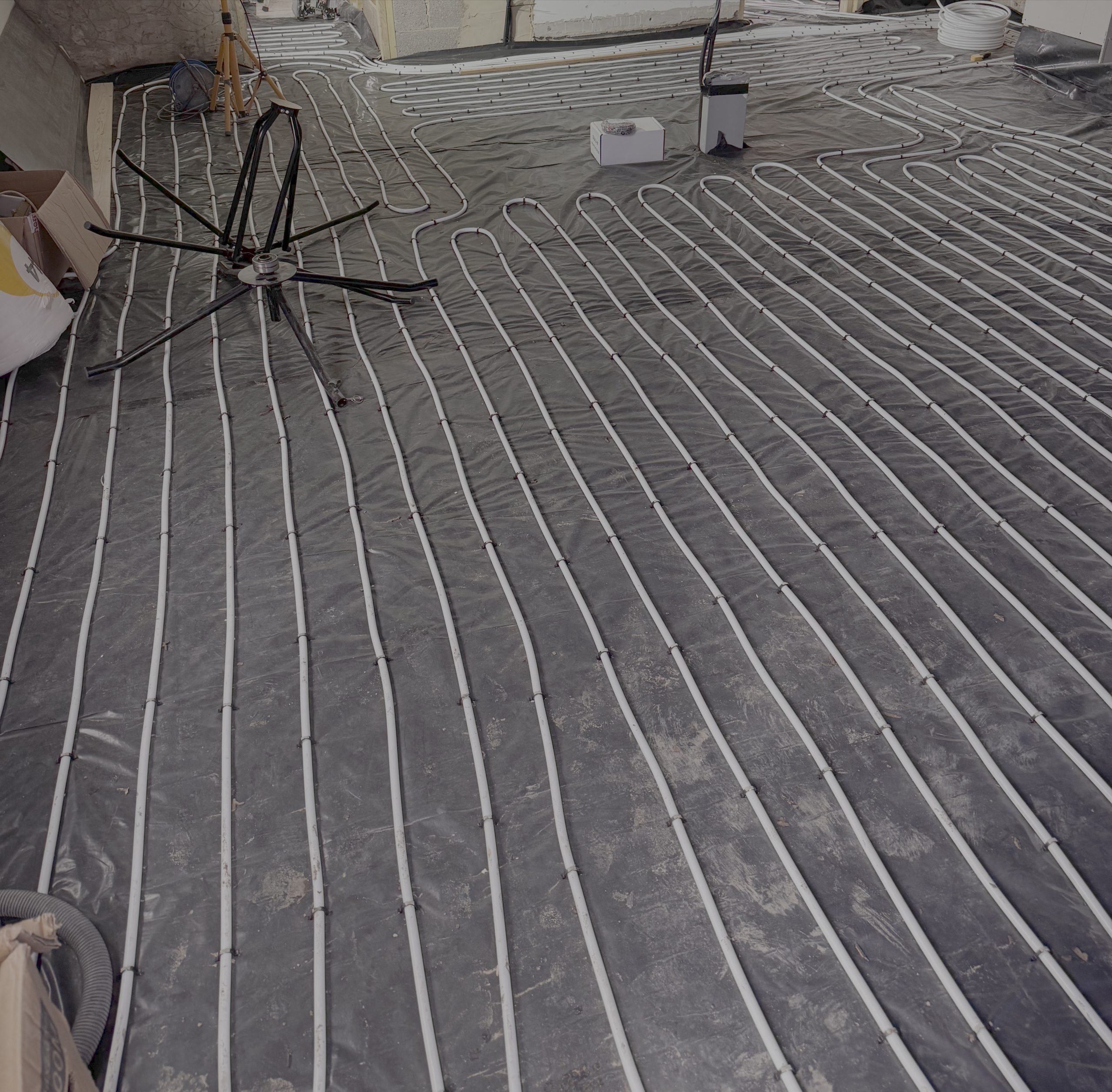
When wet underfloor heating is designed specifically for a heat pump, pipe spacing is often tighter than it would be for a traditional gas boiler system. Because heat pumps operate at lower water temperatures, the heating pipes are typically installed closer together beneath the floor to increase the heating surface area and improve heat distribution.

In many heat pump installations, pipe centres are commonly designed at approximately 100mm to 150mm spacing, depending on the room’s heat loss requirements and floor construction. By comparison, systems designed around higher-temperature gas boilers may use wider pipe spacing because the hotter water can deliver more heat over a larger area.

The tighter pipe layout allows the floor to emit heat more evenly while maintaining lower flow temperatures, helping the heat pump achieve higher efficiency and lower running costs.

This allows the floor to deliver the required heat output while keeping water temperatures low, helping the heat pump achieve higher efficiency levels.

For homeowners planning extensions, major renovations, or new-build projects, this is an important consideration. Designing underfloor heating with future heat pump compatibility in mind can avoid expensive modifications later and help maximise system efficiency from day one.


Benefits for Larger Spaces

Underfloor heating is particularly effective in:

  • Open-plan kitchens
  • Rear extensions
  • Large living areas
  • Properties with extensive glazing
  • New-build homes

These spaces often have greater heating demands and can be challenging to heat evenly using radiators alone.

By distributing heat across the entire floor area, underfloor heating can help eliminate cold spots and provide a more consistent indoor temperature.

This is one reason why many architects now incorporate heat pump-ready underfloor heating systems into modern extension and refurbishment projects. Even when a homeowner intends to keep a gas boiler initially, installing a properly designed underfloor heating system can help future-proof the property for a later transition to a heat pump.


Not Just for New Builds

A common misconception is that underfloor heating is only suitable for new-build properties.

In reality, underfloor heating can often be incorporated into renovation and refurbishment projects, particularly when floors are already being replaced or upgraded.

Many homeowners choose to install underfloor heating in:

  • Kitchen extensions
  • Ground-floor refurbishments
  • Loft conversions
  • Whole-house renovation projects

This can be an excellent opportunity to future-proof a property for a heat pump installation.


The Comfort Factor

Beyond efficiency, underfloor heating offers a different type of comfort compared to traditional radiators.

Because heat rises naturally from the floor, rooms tend to feel warm and comfortable at lower air temperatures. Many homeowners find the heat more evenly distributed throughout the space, without the hot and cold areas sometimes associated with radiator-based systems.

The absence of wall-mounted radiators can also provide greater flexibility when planning room layouts and furniture placement.


Is Underfloor Heating Essential?

No.

A heat pump can still perform very well with a correctly designed radiator system. Many successful heat pump installations use upgraded radiators without any underfloor heating at all.

However, where underfloor heating is practical, it can help maximise the efficiency and performance of the system, particularly in larger areas, modern extensions, and open-plan living spaces.

In many contemporary homes, large kitchen-diners and open-plan family rooms feature extensive glazing, bi-fold doors, and high ceilings. While these spaces can certainly be heated using radiators, the heat output required may result in radiators that are considerably larger than many homeowners expect.

In some cases, achieving the required heat output at low heat pump temperatures can mean installing very large radiators that impact wall space, furniture layouts, and the overall aesthetics of the room.

For this reason, many homeowners undertaking extensions or major refurbishments choose underfloor heating instead. By using the entire floor area as the heat emitter, underfloor heating can often provide the required heat output without the need for oversized radiators, while also delivering a more even and comfortable heat distribution.

The key is not whether a property has underfloor heating, but whether the entire heating system has been designed to operate efficiently at the lower temperatures that heat pumps are intended to use.

For homeowners already planning renovation works, extensions, or floor replacements, underfloor heating is often worth considering as part of a long-term strategy to improve comfort, energy efficiency, and future heat pump compatibility. In many large open-plan spaces, it is simply the most practical and visually appealing solution.

Underfloor heating pipes for heat pump

The hidden costs homeowners often overlook

When homeowners first hear about heat pump grants, their attention naturally focuses on the amount of funding available. While grants can significantly reduce the upfront cost of installation, many people are surprised to discover that the heat pump itself is only one part of the overall project.

The reality is that a successful heat pump installation often involves improvements to the wider heating system and, in some cases, the property itself.

Radiator Upgrades

Because heat pumps operate at lower flow temperatures than traditional gas boilers, existing radiators may not always provide sufficient heat output.

Depending on the property’s heat loss calculations, homeowners may need:

  • Larger radiators
  • Additional radiators
  • Double or triple panel radiators
  • Fan-assisted radiators in some situations

In larger open-plan spaces, the radiators required to match the performance of a heat pump can become surprisingly large, which is one reason many homeowners choose underfloor heating when renovating or extending their homes.

Pipework Modifications

Pipework is one of the most commonly overlooked costs.

Many London properties are over 100 years old and have passed through multiple owners over several decades. During that time, heating systems are often altered, extended, repaired, and modified numerous times.

As a result, existing pipework may not always be suitable for the higher flow rates required by a heat pump. Hidden restrictions, mixed pipe sizes, and older microbore systems can all affect performance.

Where necessary, sections of pipework may need upgrading to ensure the system can distribute heat efficiently throughout the property.

Insulation Improvements

A heat pump can only perform as well as the property allows.

If a home loses heat too quickly, the heat pump must work harder, increasing electricity consumption and reducing efficiency.

Common upgrades may include:

  • Loft insulation
  • Wall insulation
  • Floor insulation
  • Draught-proofing
  • Window and door improvements

While not every property requires extensive upgrades, insulation improvements are often one of the most effective ways to improve heat pump performance and reduce running costs.

Hot Water and Electrical Upgrades

Many homeowners are unaware that a heat pump installation require a new hot water cylinder, updated controls, or electrical upgrades.

Depending on the property, works may include:

  • New hot water cylinders
  • Electrical circuits
  • Consumer unit upgrades
  • External isolators and controls

These costs can vary considerably from one property to another.

Professional Surveys and Design

Unlike a simple boiler replacement, a heat pump installation requires detailed planning and design.

This often includes:

  • Heat loss calculations (done by MSC fitter as part of installation)
  • Property surveys
  • System design
  • Radiator assessments
  • Pipework assessments
  • Compliance documentation

These steps are essential to ensure the system performs efficiently and delivers the expected comfort levels.

The Cost Many Homeowners Don’t Consider

Perhaps the biggest hidden cost is assuming the grant covers everything required to make a heat pump work effectively.

In reality, many of the most successful heat pump installations take place during major refurbishments, extensions, or whole-house renovation projects. When floors are already being replaced, pipework is accessible, insulation is being upgraded, or new heating systems are being installed, preparing a property for a heat pump becomes far more practical and cost-effective.

Homeowners should also understand that accepting a heat pump grant is typically a long-term commitment to low-carbon heating. In most cases, the existing gas boiler is removed and the heat pump becomes the property’s primary heating system. The decision should therefore be based on whether the property is genuinely suitable for a heat pump, not simply on the availability of grant funding.

A grant can significantly reduce installation costs, but it should be viewed as one part of a wider property improvement strategy. The most successful projects are those where the property, heating system, and homeowner’s expectations are aligned from the outset.

Whether a heat pump is cheaper to run than a gas boiler

This is one of the most common questions homeowners ask, but the answer depends on the property.

A heat pump can produce several units of heat for every unit of electricity it consumes, making it highly efficient. However, electricity is typically more expensive than gas, which means efficiency alone does not guarantee lower energy bills.

Based on energy prices in 2026, many MCS-certified installers would agree that homeowners should not expect dramatic savings compared to a modern, efficient gas boiler. In many cases, running costs can be broadly similar when comparing a well-performing gas boiler with a correctly designed heat pump system.

However, energy prices change over time, and nobody can accurately predict how gas and electricity prices will develop in the coming years. For this reason, homeowners should avoid making decisions based solely on today’s energy tariffs.

One advantage of heat pumps is that they can work particularly well alongside solar panels. By using electricity generated on-site, homeowners can reduce the amount of electricity imported from the grid, helping to lower overall running costs and improve the economics of the system.

Another important benefit is the reduction in carbon emissions. Unlike gas boilers, heat pumps do not burn fossil fuels within the home and are considered a low-carbon heating solution. For many homeowners, reducing their environmental impact is just as important as reducing energy bills.

The key factor is how well the property is prepared for low-temperature heating.

A well-insulated home with correctly sized radiators or underfloor heating can allow a heat pump to operate efficiently and economically. In contrast, a poorly insulated property with an unsuitable heating system may see little financial benefit and could even experience higher energy bills.

In our experience, the question should not be “Is a heat pump cheaper than a gas boiler?” but rather “Is my property ready for a heat pump?”.

When installed in a suitable property and designed correctly, a heat pump can provide comfortable, low-carbon heating for many years while helping homeowners reduce their reliance on fossil fuels.

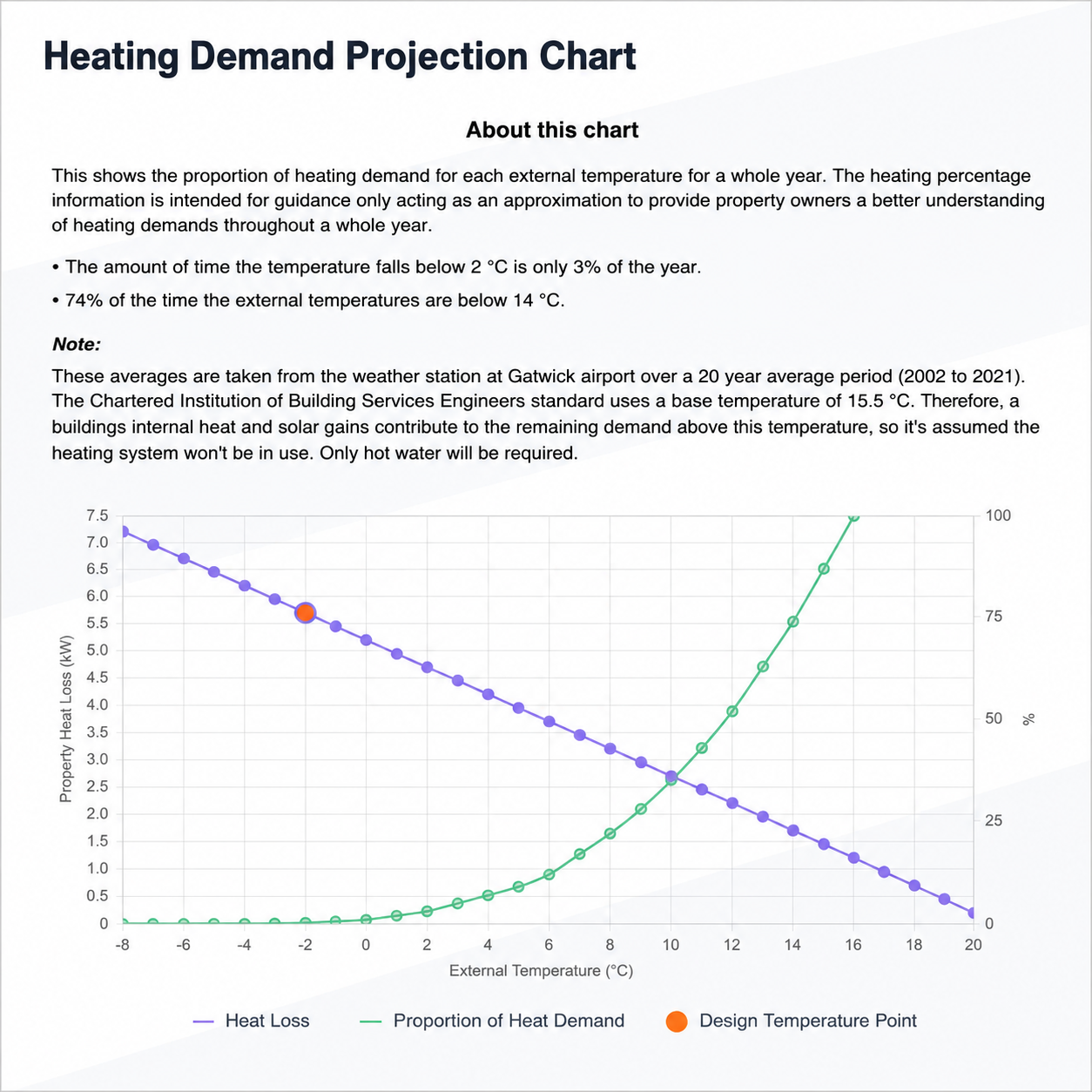
Heating Demand Projection Chart

Common misconceptions about heat pump installations

As heat pumps become more popular, homeowners are often exposed to conflicting information online. Some believe a heat pump will dramatically reduce their energy bills overnight, while others assume they only work in new-build homes.

The reality usually sits somewhere in the middle.


“A Heat Pump Is Just a Boiler Replacement”

This is probably the biggest misconception.

A heat pump is part of a complete heating system and should not be viewed as a simple appliance swap. Insulation levels, heat loss calculations, radiators, pipework, controls, and hot water requirements all influence how well the system performs.


“Every Home Is Ready for a Heat Pump”

Not necessarily.

Many properties can successfully use a heat pump, but some require upgrades before they can operate efficiently. Older homes may need improvements to insulation, radiators, or pipework before installation.


“Heat Pumps Always Reduce Energy Bills”

Not always.

Based on current energy prices, many homeowners will find that running costs are broadly comparable to a modern gas boiler. The outcome depends heavily on the property’s efficiency, heating system design, and how the heat pump is operated.


“Heat Pumps Don’t Work in Winter”

Modern heat pumps are specifically designed to operate in cold weather and are widely used throughout Northern Europe.

The question is not whether a heat pump can work during winter, but whether the property has been designed correctly to allow it to operate efficiently.


“You Must Have Underfloor Heating”

No.

A well-designed radiator system can work extremely well with a heat pump. However, underfloor heating is often preferred in larger extensions and open-plan spaces because it allows the heat pump to operate at lower temperatures and higher efficiency.


“The Grant Covers Everything”

Unfortunately, this is rarely the case.

While grant funding can significantly reduce installation costs, homeowners should still budget for potential upgrades to radiators, pipework, insulation, hot water systems, and electrical installations where required.


“Getting the Grant Is the Most Important Part”

In reality, property suitability is far more important than the grant itself.

A grant can help pay for a heat pump, but it cannot compensate for poor insulation, unsuitable radiators, undersized pipework, or an incorrectly designed heating system.

The most successful heat pump installations are not necessarily those that receive the largest grant. They are the projects where the property, heating system, and homeowner’s expectations are aligned from the outset.


“Can I Have a Heat Pump in a Flat?”

Possibly, but it depends on the property.

Some Victorian and Edwardian conversions can be suitable for heat pumps, particularly where there is space for an external unit and the flat has a degree of independence from the rest of the building.

However, most leasehold flats face additional challenges. Permissions from freeholders or management companies may be required, and restrictions relating to external units, communal areas, planning, or building regulations can make installation difficult.

For this reason, heat pumps are generally much easier to install in houses and some period conversions than in typical leasehold flats.

The property may technically be suitable for a heat pump, but ownership structure and permissions are often the deciding factors.

A recent heat pump installation case study from Putney

This recent project in Putney is a good example of when a heat pump installation makes both technical and financial sense.

The property was a 1950s house, rebuilt after the Second World War, which already benefited from cavity wall insulation and uPVC double-glazed windows. The owners were undertaking a major refurbishment and extension project, creating the perfect opportunity to completely redesign the heating, plumbing, and electrical systems.

From the outset, the renovation included significant energy-efficiency improvements. The property was due to receive a new extension built to modern Building Regulations standards, upgraded loft insulation, new windows, and a complete heating system redesign.

The heat loss calculations showed that while the original cavity wall insulation was not performing to the same standard as modern construction methods, it was still providing a reasonable level of thermal performance. Rather than undertaking costly wall upgrades, the design team focused on improving other areas of the property where greater gains could be achieved.

One of the most significant findings was the performance of the existing ground floor. The original refurbishment plans only included a modern insulated slab and underfloor heating within the new extension. However, the heat loss calculations highlighted that retaining the older ground floor construction would create a weak point in the overall heating strategy.

The large open-plan ground floor area would have required substantial radiator capacity to achieve comfortable temperatures with a low-temperature heat pump system. Following further review, the owners decided to extend the scope of works and replace the remaining original ground floor slab as part of the heat pump project.

This allowed the entire ground floor to be rebuilt with modern insulation standards and a wet underfloor heating system specifically designed for heat pump operation. By taking this approach, heat loss was significantly reduced and the whole ground floor could operate as a single, highly efficient low-temperature heating zone.

The underfloor heating system was designed around the requirements of the heat pump, with pipe centres suitable for low-temperature heating and maximum efficiency. This provided even heat distribution throughout the open-plan space while avoiding the need for oversized radiators.

The upper floors received a complete set of new radiators sized according to the room-by-room heat loss calculations, ensuring the entire property was designed around the requirements of the heat pump rather than a traditional boiler.

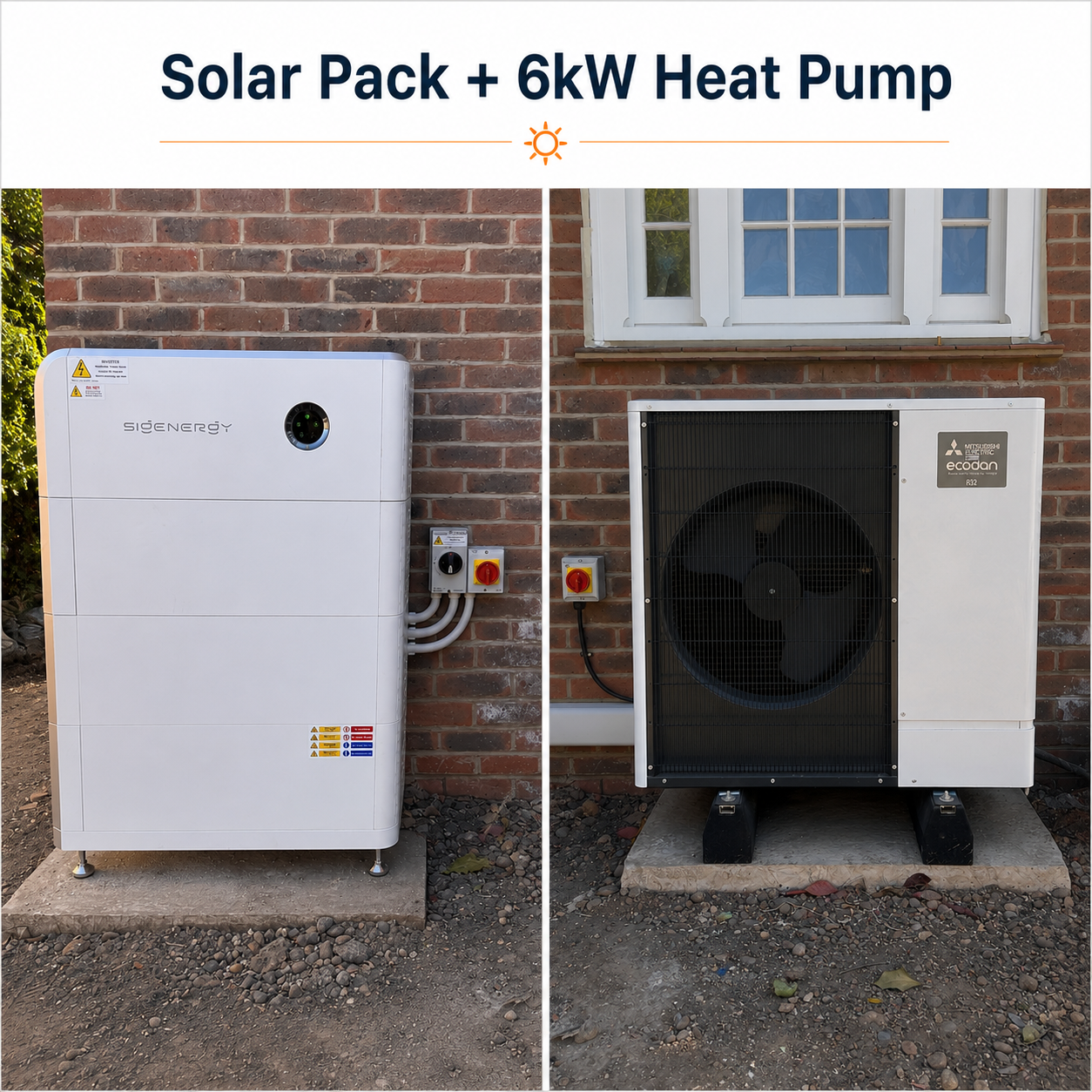
Outside, the property offered sufficient space to accommodate the heat pump installation, and the owners also chose to install solar panels with battery storage. This combination allows a proportion of the heat pump’s electricity demand to be supported by renewable energy generated on site, helping to reduce long-term running costs and improve overall energy independence.

As part of the new plumbing system, a dedicated hot water cylinder designed for heat pump operation was installed, providing reliable hot water and suitable pressure for modern household requirements.

The existing gas boiler was removed, the gas supply was capped off, and the property qualified for the £7,500 Boiler Upgrade Scheme grant, helping offset part of the installation cost.

Perhaps most importantly, this project demonstrates a key theme throughout this guide: successful heat pump installations are rarely about the grant alone. The grant helped with the cost, but the real success came from carefully assessing the property, identifying weaknesses through heat loss calculations, and investing in the upgrades that would deliver the greatest long-term benefit.

The original cavity wall insulation was retained because it was considered good enough, while investment was focused on the areas that delivered the biggest improvements, particularly the insulated ground floor, modern extension construction, upgraded loft insulation, underfloor heating, and the complete redesign of the heating system.

The result is a modern low-emission home powered by a heat pump, supported by solar energy generation and battery storage, and designed around long-term efficiency rather than simply replacing one heat source with another. It is an example of how a heat pump can work exceptionally well when it forms part of a wider refurbishment strategy and when every design decision is guided by heat loss calculations rather than assumptions.

Left: white SigEnergy heat pump cabinet mounted on a brick wall, with utility connections; right: outdoor Ecodan unit with a large cooling fan.

How Kluk Construction Can Help?

At Kluk Construction, we believe successful heat pump installations start long before the heat pump itself is installed.

As this guide has demonstrated, the biggest challenge is often not securing the grant, but ensuring the property is genuinely ready for low-temperature heating. Insulation levels, heat loss calculations, radiator sizing, pipework design, underfloor heating, and hot water systems all play an important role in determining whether a heat pump will perform efficiently.

This is where our experience as a construction and refurbishment company provides a unique advantage.

Rather than looking at the heat pump in isolation, we take a whole-house approach. We regularly work on extensions, renovations, and full property refurbishments where heating systems, insulation, flooring, plumbing, and energy-efficiency improvements are considered together from the outset.

We can assist with:

  • Property assessments and refurbishment planning
  • Heat pump-ready renovation projects
  • Underfloor heating installations
  • Floor insulation and slab upgrades
  • Radiator and pipework modifications
  • Loft and general insulation improvements
  • Plumbing and hot water system upgrades
  • Solar panel and battery-ready projects
  • Coordination with heat pump designers and installers

Whether you are planning a major refurbishment or simply exploring your options, our goal is to help homeowners make informed decisions based on the property’s actual requirements rather than assumptions.

In many cases, the most cost-effective approach is not to install a heat pump immediately, but to future-proof the property during planned renovation works. By preparing the home correctly today, homeowners can make the transition to low-carbon heating far easier in the future.

If you are considering a heat pump as part of a renovation, extension, or whole-house upgrade, Kluk Construction can help you assess the opportunities, understand the challenges, and prepare your property for long-term energy efficiency.

Two construction workers stand by an open van filled with stacked toolboxes and a drill set, KLUK branding visible on boxes and clothing.

A Personal Note from Marcin Kluk

As heat pumps become more common across the UK, it’s worth remembering that this technology is far from new. Across continental Europe, there are countless examples of homes successfully using heat pumps, often in climates much colder than London.

The biggest challenge in London is not the technology itself. The challenge is the age and history of our housing stock. Many London homes are 80, 100, or even 150 years old and have been altered, extended, refurbished, and modernised multiple times by different owners.

As builders, we regularly uncover a mixture of old and new construction methods within the same property. Heating systems, insulation standards, pipework layouts, and building fabric can vary significantly from one part of the house to another. Heat pumps introduce different design requirements, but these challenges can usually be overcome, particularly when they are considered as part of a major refurbishment project.

If you asked me personally whether I would install a heat pump, my answer would be both yes and no.

My answer is definitely yes if I were building a new home, particularly in an area without access to mains gas. In that situation, a heat pump is often one of the best heating solutions available.

Within London, the answer depends on the property and the scale of work being planned. If I was undertaking a major renovation, extension, or whole-house refurbishment, I would absolutely consider a heat pump as part of the project. When floors, plumbing, insulation, and heating systems are already being upgraded, it becomes much easier to create a property that is truly optimised for low-temperature heating.

However, if my current gas boiler was working well, the house was already finished, and I had no plans for significant renovation works in the next few years, I would be less inclined to rush into a heat pump installation purely because a grant is available.

Another point worth considering is property value. At the time of writing, I am not seeing clear evidence that installing a heat pump alone significantly increases the value of a property. For that reason, I would not view a heat pump as a short-term investment if my intention was to sell the property shortly afterwards.

For me, a heat pump makes the most sense when it forms part of a long-term plan: improving comfort, reducing emissions, future-proofing the property, and creating a more efficient home for years to come.

The main message I would like homeowners to take away from this guide is simple: don’t start with the grant, start with the property. A well-designed heat pump installation can work exceptionally well, but only when the home is ready for it. Taking the time to understand your property’s insulation, heat loss, heating system, and future plans will almost always lead to better decisions and better results.


Marcin Kluk leaning on a railing by the river, holding a cup of coffee, with trees and city buildings in the background.

author avatar
Marcin Kluk Founder & Director
Marcin Kluk is the founder of Kluk Construction, specialising in full house refurbishments, home renovations, extensions, and residential construction projects across South West London. With over 15 years of experience in the UK construction industry, he is known for quality craftsmanship, reliable project management, and attention to detail.