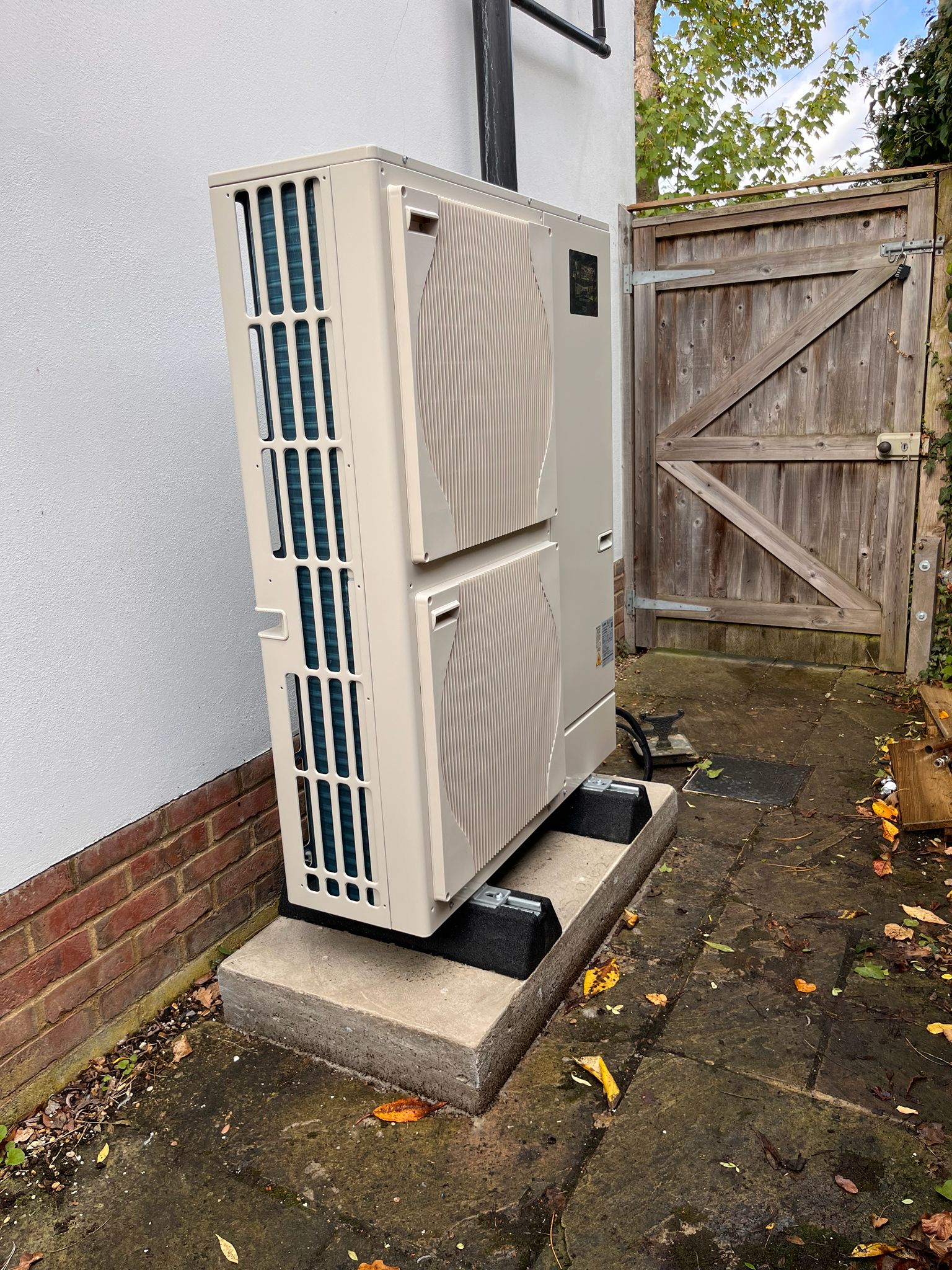
While heat pumps can work very effectively with radiators, underfloor heating is often considered the ideal heating system companion for a heat pump.
The reason comes down to temperature.
Heat pumps achieve their highest efficiency when operating at lower flow temperatures. Underfloor heating systems are specifically designed to deliver comfortable room temperatures using water that is significantly cooler than that required by traditional radiator systems.
Instead of concentrating heat into a relatively small radiator surface, underfloor heating spreads heat evenly across the entire floor area. This larger heating surface allows the system to maintain comfort while operating at lower temperatures and consuming less energy.
How Underfloor Heating Works with Heat Pumps
A typical underfloor heating system may operate with water temperatures between 30°C and 45°C, which aligns closely with the optimal operating range of many air source heat pumps.
This allows the heat pump to:
- Operate more efficiently
- Use less electricity
- Maintain more consistent temperatures
- Reduce system cycling
- Improve overall comfort levels
The result is a heating system that can deliver gentle, even warmth throughout the property.
However, it is important to understand that not all underfloor heating systems are designed in the same way.
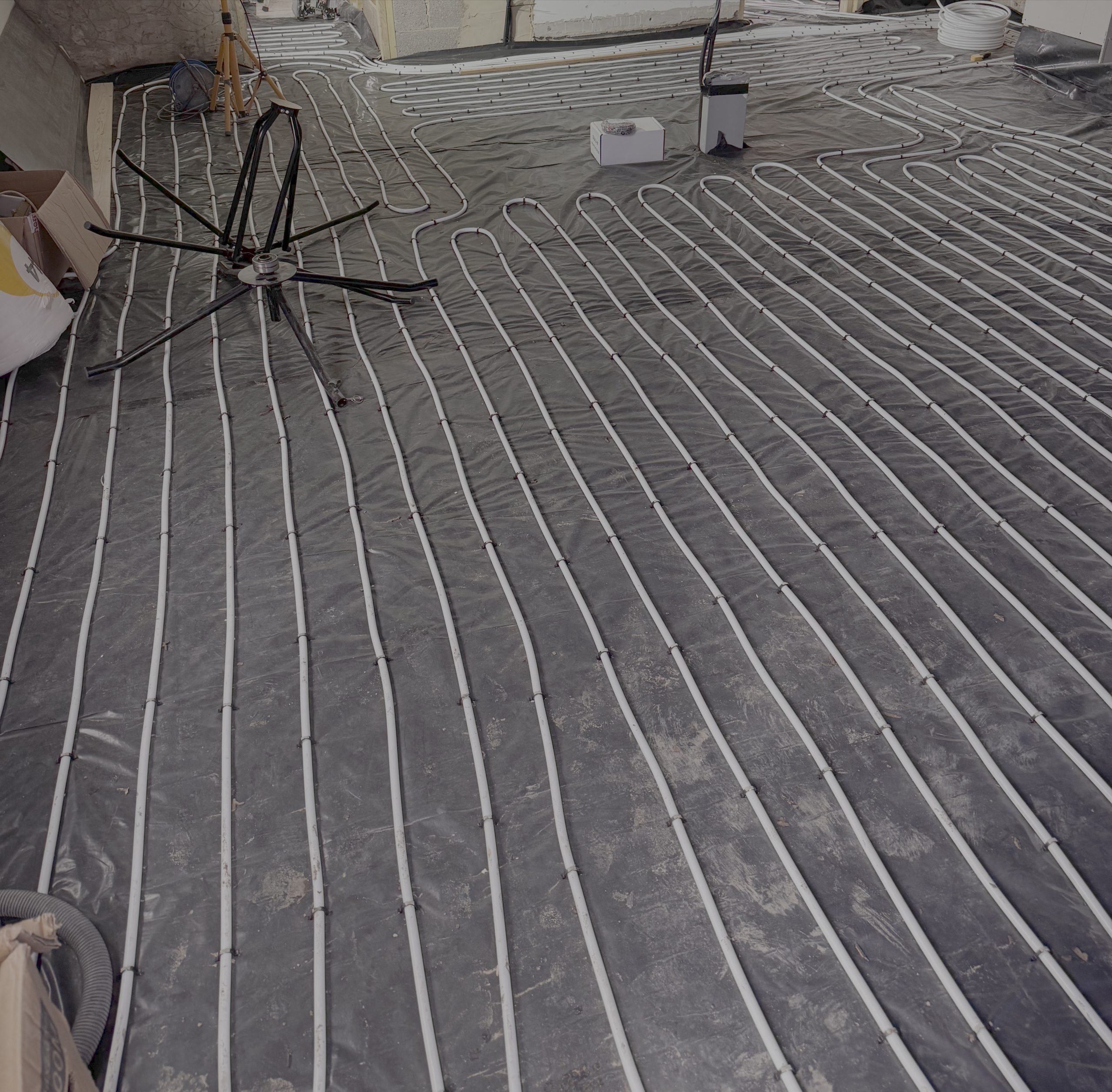
When wet underfloor heating is designed specifically for a heat pump, pipe spacing is often tighter than it would be for a traditional gas boiler system. Because heat pumps operate at lower water temperatures, the heating pipes are typically installed closer together beneath the floor to increase the heating surface area and improve heat distribution.
In many heat pump installations, pipe centres are commonly designed at approximately 100mm to 150mm spacing, depending on the room’s heat loss requirements and floor construction. By comparison, systems designed around higher-temperature gas boilers may use wider pipe spacing because the hotter water can deliver more heat over a larger area.
The tighter pipe layout allows the floor to emit heat more evenly while maintaining lower flow temperatures, helping the heat pump achieve higher efficiency and lower running costs.
This allows the floor to deliver the required heat output while keeping water temperatures low, helping the heat pump achieve higher efficiency levels.
For homeowners planning extensions, major renovations, or new-build projects, this is an important consideration. Designing underfloor heating with future heat pump compatibility in mind can avoid expensive modifications later and help maximise system efficiency from day one.
Benefits for Larger Spaces
Underfloor heating is particularly effective in:
- Open-plan kitchens
- Rear extensions
- Large living areas
- Properties with extensive glazing
- New-build homes
These spaces often have greater heating demands and can be challenging to heat evenly using radiators alone.
By distributing heat across the entire floor area, underfloor heating can help eliminate cold spots and provide a more consistent indoor temperature.
This is one reason why many architects now incorporate heat pump-ready underfloor heating systems into modern extension and refurbishment projects. Even when a homeowner intends to keep a gas boiler initially, installing a properly designed underfloor heating system can help future-proof the property for a later transition to a heat pump.
Not Just for New Builds
A common misconception is that underfloor heating is only suitable for new-build properties.
In reality, underfloor heating can often be incorporated into renovation and refurbishment projects, particularly when floors are already being replaced or upgraded.
Many homeowners choose to install underfloor heating in:
- Kitchen extensions
- Ground-floor refurbishments
- Loft conversions
- Whole-house renovation projects
This can be an excellent opportunity to future-proof a property for a heat pump installation.
The Comfort Factor
Beyond efficiency, underfloor heating offers a different type of comfort compared to traditional radiators.
Because heat rises naturally from the floor, rooms tend to feel warm and comfortable at lower air temperatures. Many homeowners find the heat more evenly distributed throughout the space, without the hot and cold areas sometimes associated with radiator-based systems.
The absence of wall-mounted radiators can also provide greater flexibility when planning room layouts and furniture placement.
Is Underfloor Heating Essential?
No.
A heat pump can still perform very well with a correctly designed radiator system. Many successful heat pump installations use upgraded radiators without any underfloor heating at all.
However, where underfloor heating is practical, it can help maximise the efficiency and performance of the system, particularly in larger areas, modern extensions, and open-plan living spaces.
In many contemporary homes, large kitchen-diners and open-plan family rooms feature extensive glazing, bi-fold doors, and high ceilings. While these spaces can certainly be heated using radiators, the heat output required may result in radiators that are considerably larger than many homeowners expect.
In some cases, achieving the required heat output at low heat pump temperatures can mean installing very large radiators that impact wall space, furniture layouts, and the overall aesthetics of the room.
For this reason, many homeowners undertaking extensions or major refurbishments choose underfloor heating instead. By using the entire floor area as the heat emitter, underfloor heating can often provide the required heat output without the need for oversized radiators, while also delivering a more even and comfortable heat distribution.
The key is not whether a property has underfloor heating, but whether the entire heating system has been designed to operate efficiently at the lower temperatures that heat pumps are intended to use.
For homeowners already planning renovation works, extensions, or floor replacements, underfloor heating is often worth considering as part of a long-term strategy to improve comfort, energy efficiency, and future heat pump compatibility. In many large open-plan spaces, it is simply the most practical and visually appealing solution.